Many businesses today, especially startups and expanding brands, increasingly view physical stores as an impractical or unsustainable foundation for their operations. In a time characterized by online accessibility, analytics-based choices, and adaptable practices, the conventional brick-and-mortar establishment is increasingly turning into an added cost instead of a benefit. Companies that focus on their online visibility, engage with their audience digitally, and implement scalable systems are more equipped to adjust, compete, and succeed in today’s market.
Is it still practical to consider building or maintaining a physical store?
Having a brick-and-mortar location was considered a fundamental element of achieving business success for many years. A storefront represented trustworthiness, exposure, and stability. Today, however, shifting consumer preferences, increasing operational expenses, and rapid digital evolution have made setting up and maintaining a physical store or office more challenging for many businesses—particularly those that are small or medium-sized.
#1 The Cost
One of the biggest hurdles is expense. Brick-and-mortar locations incur significant ongoing costs: lease agreements, utility bills, upkeep, insurance, government permits, and salaries for staff. Let us take for example prime locations, which definitely have soaring rentals. These costs can take up a significant portion of your net income even before any transactions are made. In contrast to online channels like online shops, these expenses stay steady no matter the volume of visitors or shifts in demand throughout the duration of the year. It is evident that in times of economic difficulties, companies continue to face the same economic challenges, which renders brick-and-mortar locations as risky and uncertain.
#2 Market Behavior
The shift in customer behavior has transformed the shopping experience. Clients today demand ease, quickness, and availability. Shopping online empowers consumers to explore more product options, compare prices, read feedback, and complete transactions at their convenience—all from the comfort of their homes and at their fingertips. This change has led to a drop in customer visits to numerous physical stores, especially those located away from key shopping areas. Even when brick-and-mortar locations are visually appealing and fully stocked, they face tough competition from the ease of mobile devices and instant purchasing possibilities.
#3 Scalability
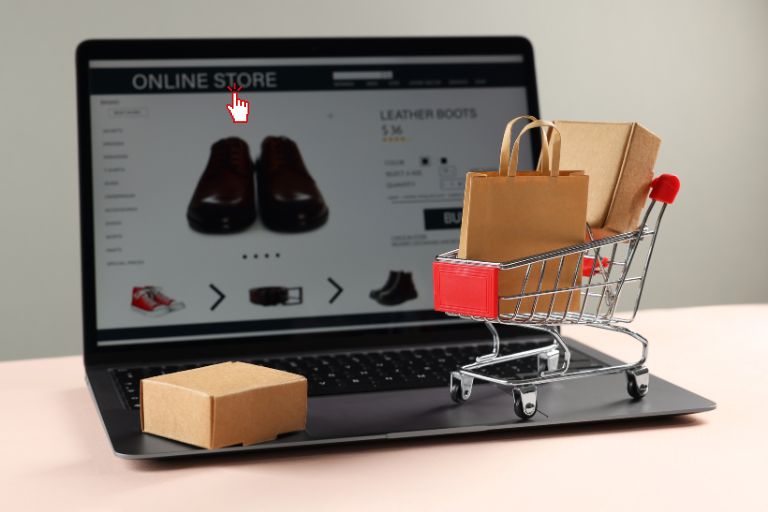
Another significant aspect to consider is scalability, as the need to expand a physical store or office usually involves acquiring new sites, hiring extra personnel, producing inventory, and increasing financial resources. Digital businesses, in contrast, have the potential to expand quickly while maintaining much lower additional costs. An online store has the potential to reach customers in various cities, countries, or even continents without the need to establish new locations. Developing a new website or an e-commerce shop is a lot cheaper and more realistic compared to the gradual, costly, and complex process of finding and building physical stores.
#4 Inventory management
Managing inventory brings additional challenges in brick-and-mortar stores. Limited shelf space hinders the range of products available, whereas excess inventory may freeze up funds and grow storage expenses. Excess stock frequently results in price reductions or loss. On the other hand, business websites, e-commerce, and online shops improve inventory forecasting, simplify stock management, and enable on-demand or dropship models that reduce financial risk.
#5 Workforce Requirement
The staffing needs of physical stores contribute to the complexity of the scenario. Bringing on, developing, and overseeing in-store personnel requires significant investment and effort regardless of sales performance. A brick-and-mortar store requires cashiers, sales associates, stock personnel, and sometimes security and maintenance staff just to remain operational. These labor costs are fixed and ongoing, including wages, benefits, training, and overtime, even during slow business periods. Conversely, online shops built by competent ecommerce developers with a proven track record can operate with more adaptable teams enhanced by automation and software solutions. This online element reduces labor dependency, lowers fixed expenses, and enables greater scalability without significantly increasing workforce costs.
#6 External Disruptions
External disruptions have highlighted the vulnerabilities of physical shops. Situations like health crises, natural disasters, and logistical challenges can quickly diminish the number of visitors or necessitate short-term closures. Companies that establish a robust online presence demonstrate greater resilience and chooses the best development team to maintain their operations even when their physical locations are unavailable.
Physical Stores Still Have Value, But Only for Some Industries
It’s essential to understand that physical stores still hold significant value but only for certain sectors—like high-end retail, immersive shopping experiences, or community-focused services. An example is grocery retail, which continues to be mainly in-person due to the importance of perishability, freshness inspection, and immediate satisfaction. Healthcare services for medical care require in-person engagement in clinics, while automotive repair relies heavily on vehicle services done directly at the shop.
In a comparable manner, high-end brands operate flagship locations as a way to strengthen their brand image, foster trust, and display exclusivity. Evidently, in these industries, physical stores serve not just as a point of sale but also as an essential element of product delivery, customer confidence, and brand engagement.
My Takeaway
Launching a business in today’s environment goes beyond mere enthusiasm or visibility; it centers on achieving a favorable return on investment (ROI). Every choice, from allocating resources to organizing operations, should be evaluated for its potential to produce enduring advantages. Much so, choosing a skilled and trustworthy team of developers to help you out with your new venture.
Although brick-and-mortar locations were once the foundation of retail, today’s economic environment indicates that their drawbacks are becoming more significant than their advantages for numerous companies. In large cities, the costs associated with commercial leases continue to be elevated, frequently standing out as one of the most significant fixed costs for retailers.
Additionally, physical locations incur continuous costs for utilities, maintenance, insurance, inventory storage, and staffing—expenses that remain constant irrespective of daily sales outcomes. Numerous global retail reports indicate that online shopping is experiencing consistent growth each year, while many brick-and-mortar stores are struggling with reduced customer visits and closures, especially following the pandemic’s boost to digital engagement.
Digital platforms enable companies to function around the clock, expand their reach to wider geographic areas, and grow with much reduced costs. Digital tools offer immediate insights, focused outreach, and streamlined processes that brick-and-mortar locations find challenging to replicate without incurring extra costs.
Thriving enterprises are developed with a focus on efficiency, scalability, and profitability, making certain that resources—time, money, and effort—are allocated to areas that yield the most significant ROI. For numerous contemporary businesses—particularly startups and small enterprises—the financial framework, operational limitations, and evolving consumer preferences reveal that maintaining a physical store is risky if your intent as an entrepreneur is to establish a robust, adaptable online presence like those e-commerce sites designed and developed by our reliable team. Inquire now for a free quote, so we can help you build your own online shop!